Intro
Minimalism has been one of the key philosophies that I have embedded into my pursuit of financial independence. When I first came across the concept, I had no idea how well it would play into financial independence initially. It took me quite a while to have everything “click” in my head. I’m not going to get too deep into that topic on this post (I will in the future).
I wanted to use this post to share what started my love for minimalism, and why I still think to this day that Marie Kondo’s framework is #1.
Discovering Minimalism
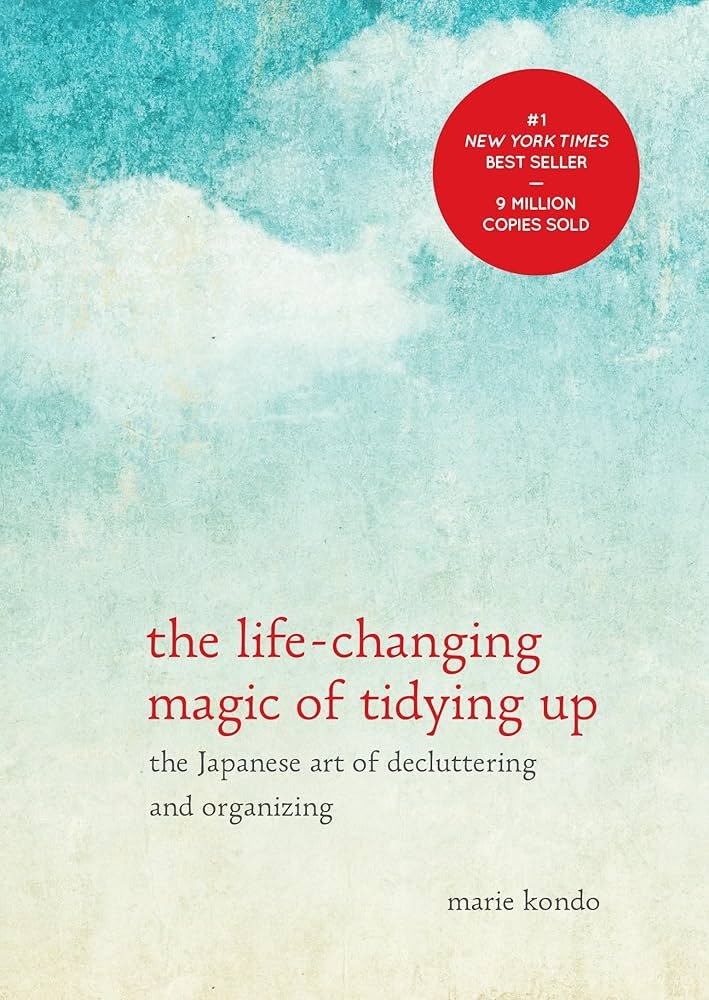
I first discovered Minimalism by stumbling across Marie Kondo’s Tidying Up with Marie Kondo show on Netflix. I was immediately enamored with her ability to softly navigate difficult conversations with her clients (we all know how crazy some people can be with their possessions) and how simple yet effective her methodology was. After a quick Netflix binge of the show, I wanted to know more– which then led me to read her well known book The Life-Changing Magic of Tidying Up: The Japanese Art of Decluttering and Organizing.
I’ve read several other books on the topic of minimalism and have watched a considerable amount of material on youtube and other platforms. But to me, nothing has resonated as strongly as Marie’s framework. The book itself is an extremely quick read– but it caused a profound effect on my life.
It’s All About Happiness
Marie lays out a simple framework that is all centered around the internal question that you need to pose to yourself: “Does object X bring me happiness?”. If the answer is “No”, you thank the object for all that it has done for you, and you discard it (donate/trash/etc.).
It’s an extremely simple decision matrix– but wow is it effective. I think it’s extremely fitting and poetic that a methodology on minimalism is minimalistic itself. It just doesn’t get any more concise, simple, and effective. In our everyday modern lives we’re constantly battling a world filled with distractions and stimuli– which can cause us to lose sight of what truly matters (achieving happiness). We buy objects that don’t bring us happiness, which we then have to spend time maintaining (cleaning/repairing/organizing) instead of using our time doing something that truly makes us happy.
I also love that Marie’s philosophy focuses on thanking the object for all that it has done for you. As a Westerner, thanking an inanimate object for all that it has done for me is not something that would have occurred naturally. At first glance, I questioned it– however after I’ve practiced it I realized how powerful it is. It has caused a mindset shift for me on a personal level and has made me a kinder and gentler person. It has made me appreciate the smallest of objects that make my life easier and more comfortable. I spend more energy focusing on preserving and taking care of the objects I have– which reduces waste. It has allowed me to find new sources of happiness within the little things in life.
Putting It Into Practice
In Marie’s book, she evaluates items to be discarded by first putting all of the items in a given category together. By doing so, you can easily ask yourself: “I have these 10 bottle openers, do I really need them all?”. Throughout the book, she offers other logistical tips to help organize your efforts. To me, the logistical elements come second to the emotional core philosophy which Kondo defines.
Personally, I modified the process itself to work for me– and I was fortunate enough to be moving between homes when I read the book. All of my belongings were packed into moving boxes, and my wife and I were excited by the prospect of getting rid of things before moving in order to make the move easier. There were so many “no-brainer” items that we knew brought us no happiness. We immediately placed these items into donate/trash/sell piles.
Items that weren’t as evident went into a pile to be evaluated on a second pass. We found that pausing our evaluation of a given item and coming back to it later led to increased clarity on whether it added value to our lives or not. There are some objects with degrees of sentimentality that can cloud the initial evaluation– but we found that coming back to the item in 30 minutes or so made the decision of keep/discard easier. Through applying Marie’s principles– we estimate that we discarded approximately 50% of our belongings. We also had a fair amount of items that we ended up selling that brought in a few hundred dollars too!
Perhaps more importantly, we continue to apply Marie’s philosophy to consumer decisions going forward. When we’re standing in the aisle of a store deciding whether to make a purchase, we quickly ask ourselves a version of the golden question “Will this bring me happiness?”. I can say that as a result we’ve saved money, had little to no buyer’s remorse, and feel like we’re reducing waste in the world (not fueling over consumption).
I strongly suggest you pick up Marie’s book. It can be read in a day, but will have an amazing impact on the rest of your life.